Safe Repair in North York, ON: How Do You Fix a Misaligned Safe Door?
When Your Safe Door Stops Closing Properly Safe Repair in


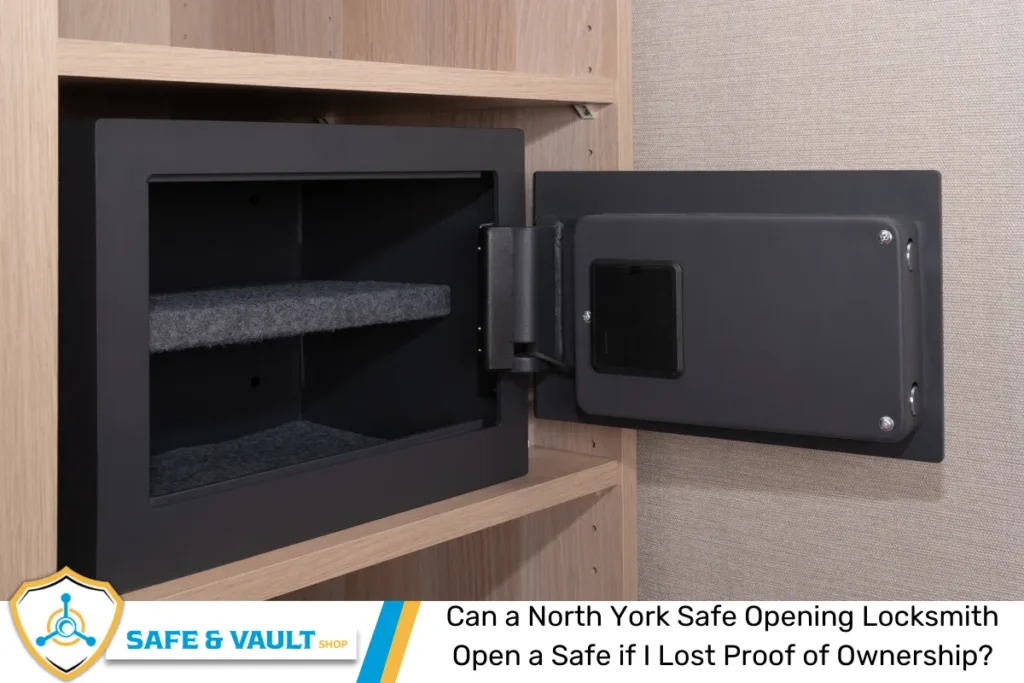
North York Safe Opening Locksmith services are often the first call people make when they’re locked out of their own safe—but panic sets in quickly if you’ve also lost proof of ownership. Important documents are inside. Family heirlooms. Cash. Maybe even business records. You know the safe is yours, but without paperwork, will any professional agree to open it?
This is where many people feel stuck. You don’t want to damage the unit. You don’t want legal trouble. And you certainly don’t want to be accused of something you didn’t do.
The good news? In Ontario, a qualified safe opening locksmith can open a safe without original proof of ownership—but only after following strict identity verification and legal procedures. Here’s how it works, and what you should expect.

A professional safe locksmith in North York operates under legal and ethical guidelines designed to prevent theft, fraud, and unauthorized access.
In Ontario, locksmiths are regulated under the Private Security and Investigative Services Act, 2005 (PSISA). This legislation requires proper licensing and imposes strict conduct standards. A safe and vault locksmith cannot legally open a safe without verifying that the person requesting service has a legitimate right to access it.
This means:
The law protects both property owners and locksmith professionals.
Losing the purchase receipt or original documentation does not automatically disqualify you from getting help. In fact, this situation is more common than most people realize.
Here are typical scenarios:
In these cases, a safe unlocking specialist will look for alternative ways to verify lawful access.

When documentation is unavailable, locksmiths use a layered verification process. This protects everyone involved and ensures compliance with provincial regulations.
The locksmith will first confirm your identity using valid ID. The address on the ID may need to match the location of the safe.
If the safe is inside a home or commercial building, you may be asked to provide:
If the safe belonged to a deceased relative, you may need:
In complex situations—such as disputed property—locksmiths may request police presence before proceeding. This is not unusual and does not imply wrongdoing. It protects all parties.
A reputable safecracker or technician will decline service if:
Professional locksmiths prioritize legality over profit. That’s a sign you’re dealing with someone trustworthy.
Different types of safes require different procedures and verification standards.
Home safes often store:
In Ontario, firearm storage safes must comply with federal storage regulations under the Firearms Act. A locksmith opening a gun safe may require extra verification to ensure compliance.
Businesses commonly use:
In commercial settings, safe and vault access may require corporate authorization.
Opening a bank-grade vault is extremely rare outside institutional settings and involves strict authorization procedures.

Many people fear that calling a locksmith means drilling and destroying their safe. That’s not usually the case.
Professional safe and vault technicians use advanced methods designed to preserve the integrity of the safe.
If necessary, controlled drilling is done precisely to:
After entry, the locksmith can often repair the unit so it remains functional.
Read Will a North York Safe Opening Locksmith Ask for Identification Before Unlocking a Safe?
Vintage safes from brands like SentrySafe, AMSEC, or older Canadian manufacturers often require specialized tools.
Antique safes may:
A trained safe opening locksmith can assess whether the safe can be restored or requires replacement parts.
In North York and across Ontario, legality depends on reasonable verification—not just paperwork.
The key principles are:
A licensed locksmith documents the service call, verifies identity, and records entry details for liability protection.
Time depends on:
Basic electronic safes may take under an hour. High-security safes can take several hours, especially if manipulation is required.
Pricing varies based on:
Attempting DIY entry often leads to higher repair costs. Damaging locking bolts or relocking devices can turn a simple job into a complex one.

Online videos make safe unlocking look easy. In reality:
Professional safecracker training takes years. It’s not guesswork—it’s precision work.
If you’re in North York and locked out of your safe:
The smoother the verification process, the faster entry can be completed.
Once your safe is open, take steps to avoid future lockouts:
Small precautions prevent major stress later.
If ownership of the safe is disputed—such as during divorce, estate litigation, or business dissolution—consult a lawyer before arranging safe access.
A locksmith cannot decide property disputes. They can only act when lawful access is reasonably established.
Losing proof of ownership doesn’t mean losing access forever. In North York, a professional safe and vault locksmith can legally open your safe—but only after careful verification and compliance with Ontario law.
The right technician balances security, legality, and professionalism. That protects your valuables—and your peace of mind.

At Safe and Vault Shop, we understand how stressful it is to lose access to your safe—especially when paperwork is missing. As a trusted safe opening locksmith serving North York, Ontario and surrounding areas, we follow strict legal procedures while helping you regain access quickly and professionally.
Our licensed technicians handle residential safes, commercial units, gun safes, and high-security systems. We verify ownership properly, use non-destructive safe unlocking techniques whenever possible, and ensure your safe remains functional after service.
If you’re locked out, don’t risk damage or legal complications. Call us today at (647) 762-7387 or fill out our contact form. Safe and Vault Shop is ready to help you regain access safely and legally.
Yes, but verification is required. If you purchased a property in North York and the safe was included in the sale, you’ll typically need proof of ownership of the property. A closing statement or deed can establish lawful possession. A safe locksmith may also ask you to sign a service authorization form confirming the safe was part of the sale. Without proof that you legally own the property where the safe is located, a technician will likely refuse service to avoid liability.
Gun safes must comply with federal Canadian storage laws. A locksmith can open the safe after verifying lawful firearm ownership and possession licenses. You may need to present a valid PAL (Possession and Acquisition Licence). The locksmith’s role is limited to opening the safe; they do not handle firearms unless legally permitted. Documentation ensures compliance with federal and provincial regulations and protects both you and the technician.
Most electronic safes do not store extensive data, but some high-end commercial units may record access logs. Safe unlocking typically does not erase stored codes unless the lock is replaced or reset. If drilling is necessary, internal components could require replacement. A professional safe and vault technician will explain whether your unit’s electronics will be preserved before beginning work, so you understand any potential impact.
In some cases, yes. If the key number is available and the lock model is identifiable, a locksmith may order a replacement key from the manufacturer. However, if the key code is unknown and the safe is locked, the unit usually must be opened first. Once opened, the technician can decode the lock and cut a working key. This process is common with older mechanical safes.
Licensed locksmiths in Ontario typically carry commercial liability insurance. This protects both the technician and the client in case of accidental damage. Before hiring a safe opening locksmith, you can ask for proof of insurance and licensing. Reputable professionals document the condition of the safe before work begins and explain risks involved. Insurance adds an extra layer of protection for high-value safes and contents.
Disclaimer: This article is for general informational purposes only and does not constitute legal advice. Laws and regulations in North York, Ontario may change. Always consult a licensed locksmith or legal professional regarding your specific situation.
Read Why Did My Digital Safe Locks Stop Working In North York, ON?
When Your Safe Door Stops Closing Properly Safe Repair in
When Your Safe Refuses to Open: Why It Happens and
When a Simple Beep Turns Into a Lockout Emergency North
Why a Damaged Safe Dial Is More Than Just an
North York Safe Opening Locksmith services are often the first

North York Safe Opening Locksmith services often begin with an

Safe Locks are designed to protect valuables, sensitive documents, firearms,

Safe Locks can fail without warning, leaving you locked out
When a Secure Investment Suddenly Won’t Open Safe Repair in

Safe Repair in North York, ON is often requested when